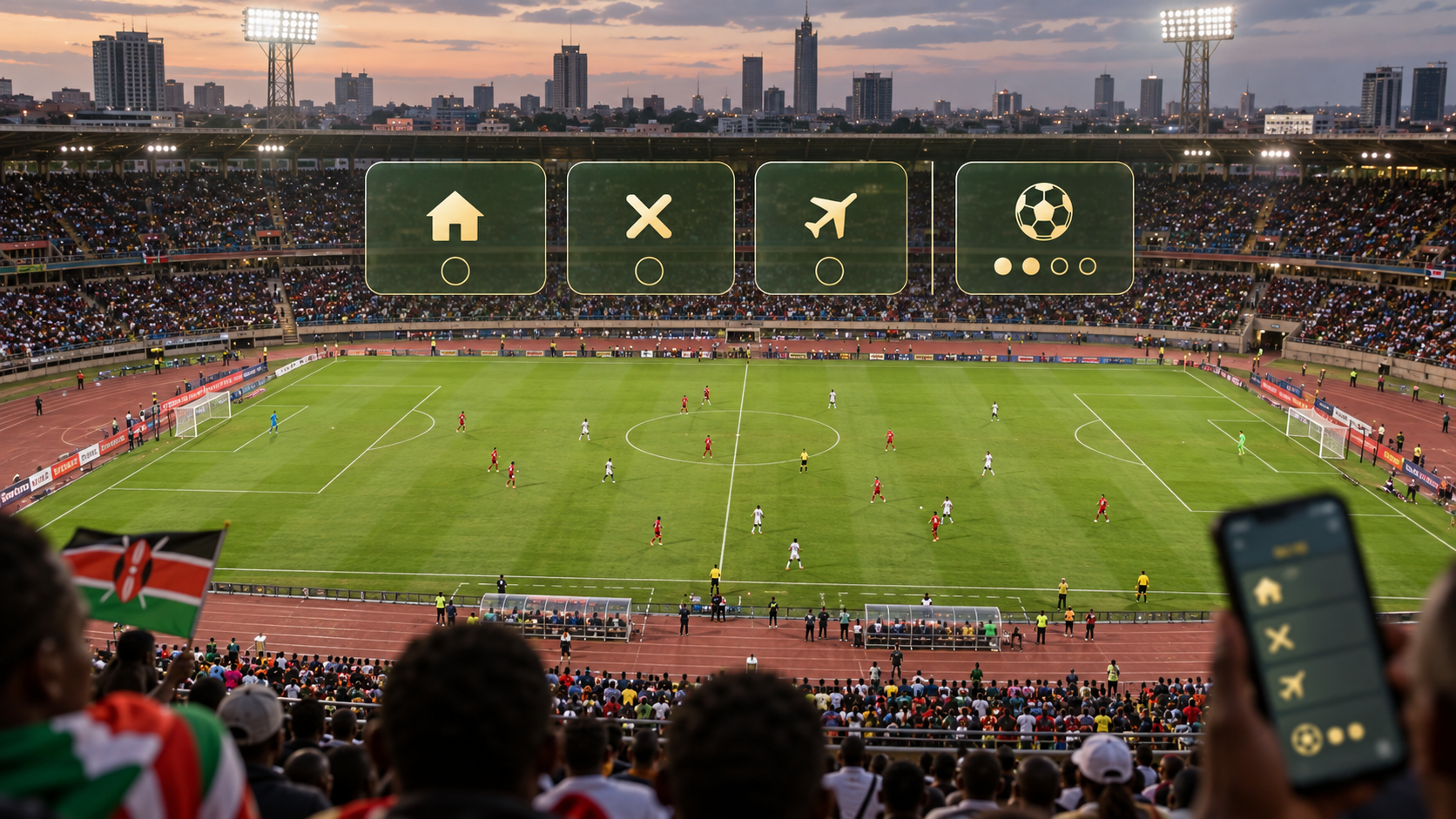
Read 1X, 12 and X2
The first symbol indicates a home win, X indicates a draw, and 2 indicates an away win. A double-chance selection is successful if either outcome named in its pair occurs under the market’s settlement terms.
Because more than one standard outcome is covered, double-chance prices are often shorter than the price for one individual 1X2 outcome. This is an observation about market structure, not a claim that the selection cannot lose.
| Selection | Covered outcomes | Not covered |
|---|---|---|
| 1X | Home win or draw | Away win |
| 12 | Home win or away win | Draw |
| X2 | Draw or away win | Home win |
What the symbols do not change
Double chance does not turn a football match into a two-outcome event; it groups outcomes for one selection. It does not necessarily include extra time, penalties or other periods. Read the market rules to confirm the event period and void conditions.
The selection does not guarantee a return. For example, 1X does not cover an away win. A mistaken symbol can reverse the covered outcomes, so read the text label beside the symbol on the slip.
How to compare a price
Compare a double-chance price only with the same pair, match and settlement definition. A price for 1X is not directly comparable to a home-win price because the covered outcomes differ. The probability converter can describe the raw percentage implied by a decimal price, but it does not combine the underlying match probabilities for you.
If you calculate an overround, remember to include every mutually exclusive outcome in the chosen market. Do not add 1X, 12 and X2 as though they were the original 1X2 outcomes: these selections overlap.
Common errors
- Reading “12” as a 1X2 market rather than home-or-away, no draw.
- Assuming the pair includes extra time without checking.
- Comparing the price with a different market and calling the comparison equivalent.
- Treating two covered outcomes as a guarantee.