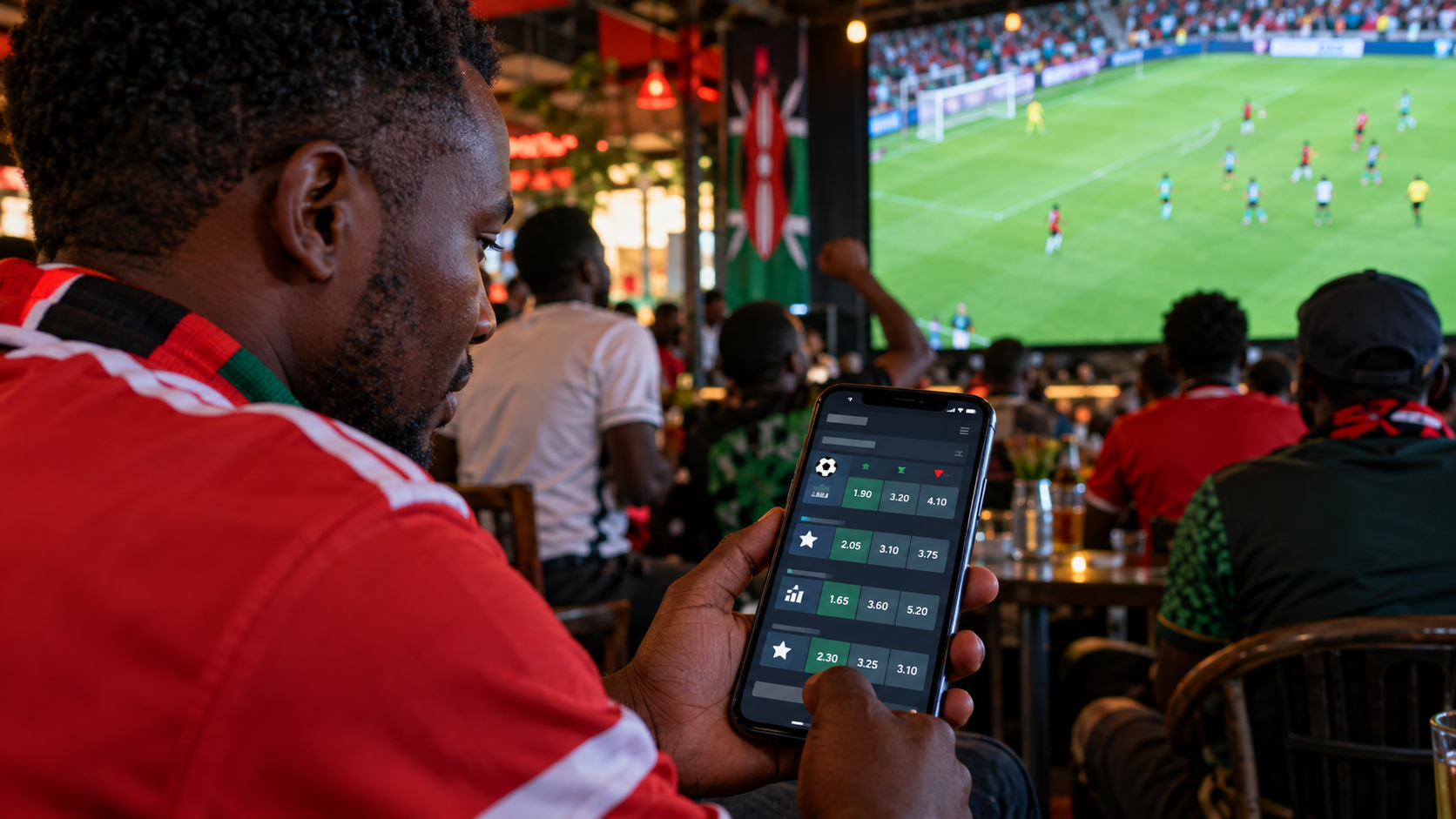
What the decimal number includes
Multiply a single-bet stake by its decimal odds to get the simple gross-return illustration. At KES 250 and odds of 1.80, the gross amount is KES 450 if the selection wins and settles at that price. The net result above the stake is KES 200.
The stake is part of the gross return. This differs from fractional odds, where the number traditionally describes profit relative to stake and the original stake is returned separately after a winning settlement.
| Stake | Decimal odds | Gross return if won | Net above stake |
|---|---|---|---|
| KES 100 | 1.50 | KES 150 | KES 50 |
| KES 250 | 1.80 | KES 450 | KES 200 |
| KES 500 | 3.00 | KES 1,500 | KES 1,000 |
Convert a price to raw implied probability
Divide 1 by decimal odds to find the raw implied probability as a proportion, or divide 100 by the price to show a percentage. For odds of 2.50, 100 ÷ 2.50 = 40%. This arithmetic is not a forecast and does not account for bookmaker margin or any assessment of team strength.
In a complete market, calculate the raw implied probability for every mutually exclusive outcome and add them. The total can exceed 100%; the amount above 100% is called overround. That excess is one reason a single raw percentage should not be read as a neutral market probability.
The practical reading sequence
These checks are useful whether you bet before an event or in-play. In-play prices can move rapidly; a number displayed on a page is not necessarily the price finally accepted on a slip.
- Confirm that the odds are decimal, not fractional or American.
- Check which exact outcome and market the price belongs to.
- Calculate gross return, then subtract stake to discuss net result.
- Look for price changes before confirmation and review settlement rules.
Common decimal-odds mistakes
Multiplying a stake by the odds and calling the full result profit overstates the net amount by the original stake. A second error is assuming that a price of 1.20 makes a selection nearly certain. The implied value is high relative to other prices, but unexpected results remain possible.
A third error is comparing prices without checking the market definition. “To win”, “draw no bet”, “double chance” and “handicap” are different propositions. The odds only make sense when paired with the terms that define settlement.